
Consistent Quality for Your Store. Your Wholesale Solution.
3D CAD Modeling vs. Traditional Wax Carving: Which Is Best for Your Custom Jewelry Line?

For independent jewelry brand owners, boutique retailers, and jewelry entrepreneurs, bringing a new collection to life is an exciting yet critical journey. One of the foundational decisions you will make during the development phase is choosing the right prototyping method.
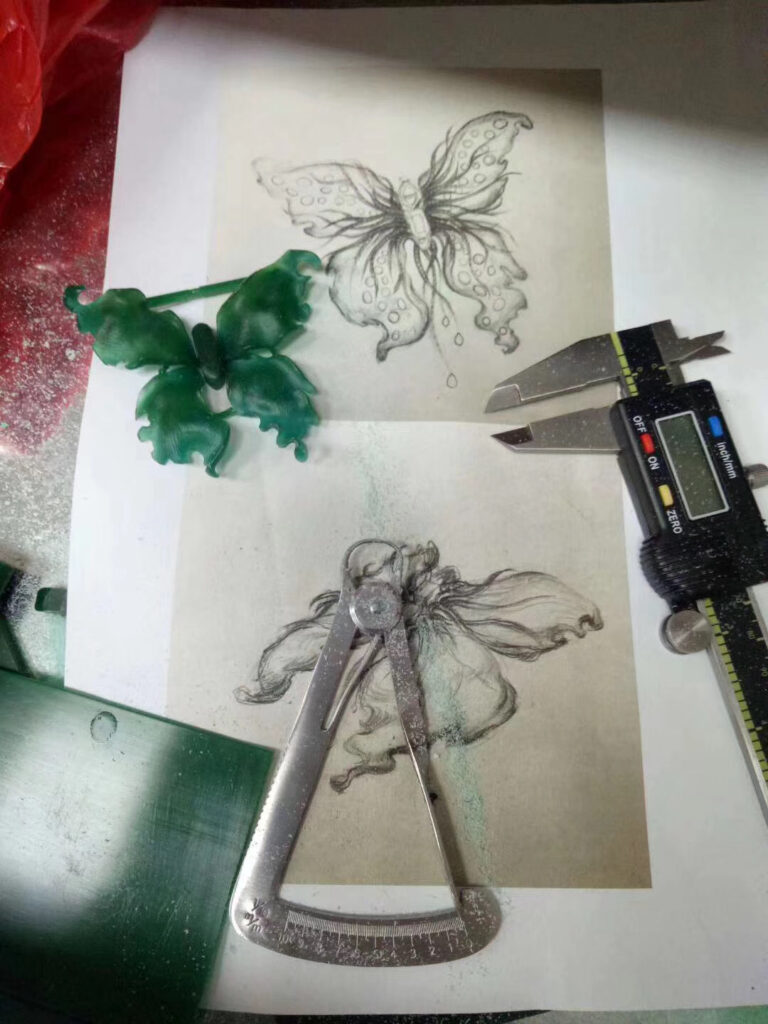
Traditionally, master bench jewelers spent hours meticulously carving designs out of wax by hand. Today, 3D CAD (Computer-Aided Design) modeling paired with 3D printing has revolutionized the industry.
Both methods have their unique place in modern jewelry manufacturing. But when it comes to scaling your jewelry business, controlling production costs, and maintaining brand consistency, which one should you choose?
Let’s break down the pros, cons, and clear winners across five key business metrics.
1. Precision and Symmetry
When your brand’s reputation relies on flawless execution, geometric precision is non-negotiable.
- Traditional Wax Carving: Hand-carving offers an organic, human touch. However, achieving absolute perfect symmetry—such as ensuring a halo of 20 melee diamonds are identical to the micrometer—is nearly impossible for the human hand.
- 3D CAD Modeling: CAD software allows designers to work with mathematical exactness. If a design requires a wall thickness of exactly 0.8mm for structural integrity, the software guarantees it. Mirroring intricate patterns or creating geometric, modern silhouettes is flawless.
The Winner: 3D CAD. For modern, geometric, or highly micro-paved designs, CAD eliminates human error.
2. Speed and Turnaround Time
In fashion and luxury retail, speed-to-market can make or break a seasonal launch.
- Traditional Wax Carving: A complex, hand-carved wax master can take days, or even weeks, of labor from a master craftsman. If you need to make changes after seeing the physical wax, the jeweler often has to start completely from scratch.
- 3D CAD Modeling: A skilled digital designer can generate a 3D model in a matter of hours. Once approved, a high-resolution 3D printer can produce the physical resin or wax model overnight.
The Winner: 3D CAD. It significantly compresses the time required to go from a conceptual sketch to a castable model.
3. The Revision and Approval Process
Miscommunication between a retailer and a factory is the number one cause of dead stock and wasted capital.
- Traditional Wax Carving: As an international buyer, you usually have to rely on 2D photos of a green wax mold sent via email. It is incredibly difficult to judge the scale, stone fit, or depth from these photos.
- 3D CAD Modeling: CAD modeling offers Photo-Realistic Rendering. Before a single grain of metal is melted, we can send you lifelike, 360-degree digital renders of the jewelry piece in different metal colors (e.g., 18K Yellow Gold vs. Platinum) with exact gemstone placements. If you want the band 10% thinner, a digital adjustment takes minutes.
4. Scalability and Re-Ordering
As your business grows, you need a manufacturing process that scales with you.
| Feature / Metric | Traditional Hand Carving | 3D CAD Modeling |
| Storage & Durability | Physical wax molds degrade, warp over time, or can be broken easily. | Digital files (.STL/.3DM) last forever in secure cloud storage. |
| Resizing Efficiency | Creating a ring in sizes 5, 6, 7, and 8 requires carving four separate waxes by hand. | The digital model is scaled instantly in the software, maintaining perfect proportions. |
| Mass Production | Relies on rubber molds, which can lose microscopic details over multiple generations. | Files can be fed to multiple 3D printers simultaneously for perfectly identical batches. |
The Winner: 3D CAD. It provides a digital blueprint that ensures your collection remains consistent whether you order 5 pieces today or 500 pieces next year.
5. When Traditional Wax Carving Still Shines
Despite the digital dominance of CAD, hand-carving is far from obsolete. It remains highly valuable for:
- High-End Organic Artistry: Sculptural jewelry, fluid textures, or asymmetrical, free-form designs that mimic nature (like crumpled metal textures or realistic leaves) often feel more alive when shaped by human hands.
- One-of-a-Kind High Jewelry: For single, high-ticket estate or antique-style pieces where the “imperfections” add vintage charm and historical value.
The Verdict: Which is Best for Your Business?
For the vast majority of B2B jewelry buyers, retailers, and DTC brands, 3D CAD modeling is the superior choice. It offers the predictability, speed, scalability, and cost-efficiency required to run a profitable, modern jewelry business.
At [Your Company Name], we bridge the gap between technology and traditional craftsmanship. Our in-house design team utilizes advanced CAD modeling to give you flawless digital previews, while our master bench jewelers handle the final casting, stone-setting, and hand-polishing to ensure your jewelry feels luxurious and high-end.
Ready to Launch Your Next Best-Selling Collection?
Don’t let manufacturing bottlenecks hold your brand back. Send us your rough sketches or mood boards today, and our engineering team will provide a Free 3D Design Feasibility Consultation within 48 hours.